
What Is a Math Lab? 5 Powerful Benefits for School Students
Mathematics is an essential subject that develops logical thinking, analytical skills, and problem-solving abilities. However, many students find mathematics challenging because traditional teaching methods often focus on formulas, calculations, and theoretical explanations.
What if students could learn mathematics by seeing, touching, exploring, and experimenting?
A Math Lab (Mathematics Laboratory) makes this possible by transforming abstract mathematical concepts into practical learning experiences. Through interactive activities, mathematical models, puzzles, and educational learning kits, students can understand complex concepts in a simple and enjoyable way.
At Viswam Edutech, we believe that mathematics should be engaging, meaningful, and accessible to every learner. Our Math Lab program supports experiential and activity-based learning, helping schools create an environment where students learn mathematics through exploration and practical application.
In this article, we will explore what a Math Lab is, its importance in schools, five major benefits for students, essential Math Lab equipment, and how schools can implement it effectively.
1. What Is a Math Lab in Schools?
A Math Lab is a dedicated learning environment where students explore mathematical concepts through hands-on activities, interactive models, educational tools, and practical experiments.
Unlike traditional classrooms, where students primarily learn through textbooks and written exercises, a Mathematics Laboratory encourages students to actively participate in the learning process.
For example:
Students can understand fractions using colourful fraction tiles.
Geometrical shapes can be explored using a Geo Board.
Mathematical operations can be demonstrated using an Abacus.
Measurement concepts can be understood using a Trundle Wheel.
Spatial reasoning can be developed through Tangram activities.
These experiences help students connect theoretical mathematics with real-life situations.
Viswam Edutech’s Math Lab is a student-centred learning program designed to strengthen conceptual understanding, mathematical reasoning, and problem-solving skills through experiential education.
2. Why Is a Math Lab Important in Schools?
Mathematics is not limited to solving problems in textbooks. It is used in everyday activities such as shopping, measuring, managing time, recognizing patterns, and making calculations.
A Math Lab helps students understand these practical applications through interactive learning experiences.
Importance of a Math Lab
Bridges Theory and Practical Learning
Students can visualize mathematical concepts and apply them through experiments and activities.
Encourages Active Participation
Instead of simply listening to explanations, students actively explore mathematical ideas.
Develops Mathematical Reasoning
Practical activities encourage learners to observe patterns, compare solutions, and think logically.
Supports Different Learning Styles
Models, puzzles, demonstrations, and physical learning materials offer different ways to understand mathematical concepts.
Makes Mathematics More Engaging
Interactive activities can help students develop curiosity and a more positive attitude towards mathematics.
A Mathematics Laboratory therefore provides an additional learning environment that supports classroom teaching and encourages deeper conceptual understanding.
3. Key Features of Viswam Edutech’s Math Lab
Viswam Edutech’s Math Lab is designed to support schools in delivering practical and activity-based mathematics education.
1. Supports Multiple Educational Boards
The program is designed to support mathematical concepts taught in CBSE, ICSE, and State Board curricula.
Schools can use the learning materials to reinforce concepts through practical activities suited to students’ learning levels.
2. Teacher-Friendly and Student-Centred
The Math Lab encourages teachers to demonstrate mathematical principles using interactive learning materials.
Students participate in guided activities, observe outcomes, and discuss their understanding.
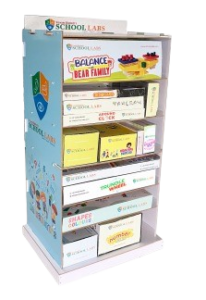
3. Structured Guide Booklets
Math Lab modules include guide booklets that support teachers and students in using the learning resources effectively.
These materials help organize activities and provide step-by-step guidance.
4. Practical Learning Kits
The program includes educational models, manipulatives, and mathematical learning tools designed to make abstract concepts easier to visualize.
Materials should be selected and used according to students’ ages and with appropriate teacher supervision.
5. Teacher Training Support
Viswam Edutech provides online and offline teacher training to help educators understand and implement Math Lab activities.
This supports effective integration of practical learning into classroom instruction.
4. Math Lab Equipment and Learning Materials
A well-designed Mathematics Laboratory includes different tools that support number concepts, geometry, measurement, arithmetic, fractions, and logical reasoning.
Viswam Edutech’s Math Lab School Kit includes the following learning materials.
1. Balance with Bear Family
Helps students explore weight comparison, balance, and basic measurement concepts through interactive activities.
2. Geo Board
Supports the understanding of geometrical shapes, lines, angles, patterns, and spatial relationships.
3. Tangram Treasure
Encourages creativity, logical reasoning, visualization, and spatial problem-solving using geometric puzzle pieces.
4. Around the Clock
Helps students learn how to read time and understand hours, minutes, and time-related calculations.
5. Amazing Abacus
Supports number recognition, place value, counting, and basic arithmetic operations.
6. Shape World
Introduces students to different shapes and their properties, helping them recognize and classify geometrical figures.
7. Number Planet
Encourages students to explore numbers, number relationships, and basic numerical operations through interactive activities.
8. Cubical Fun
Helps students understand three-dimensional shapes, cube structures, and spatial visualization.
9. Coins & Currency
Introduces students to currency recognition, money calculations, and practical mathematical applications related to everyday transactions.
10. Stamp Kit
Supports number and symbol recognition through hands-on mathematical exercises.
11. Measuring Mantra
Helps students understand length, measurement units, comparisons, and practical measurement techniques.
12. Napiersutra
Introduces multiplication using Napier’s rods, providing an alternative way to explore multiplication concepts.
13. Arithmetical Blocks
Helps students demonstrate basic mathematical operations and understand number relationships through physical models.
14. Fraction Tiles
Allows students to visualize fractions, compare fractional values, and explore equivalence.
15. Trundle Wheel
Helps students measure distances and understand the practical application of linear measurement.
These learning materials can support teachers in demonstrating mathematical concepts through age-appropriate activities and experiments.
5. Five Benefits of a Math Lab for School Students
A Math Lab offers several educational benefits by helping students experience mathematics beyond textbooks.
Benefit 1: Improves Conceptual Understanding
Many mathematical concepts, such as fractions, geometry, and measurement, can be difficult to understand through written explanations alone.
A Math Lab allows students to observe and demonstrate these concepts using physical learning materials.
For example, when students use Fraction Tiles, they can visually understand why two halves make one whole.
Such activities help make mathematical ideas easier to understand and remember.
Benefit 2: Encourages Experiential Learning
Experiential learning allows students to gain understanding through practical experiences.
A Math Lab encourages students to learn through observation, experimentation, and guided activities.
For example, students can use measurement tools to calculate distances around their classroom or school.
These experiences help connect mathematics with everyday situations.
Benefit 3: Develops Critical Thinking and Problem-Solving Skills
Math Lab activities encourage students to analyse information, identify relationships, and explore different methods of solving problems.
Puzzles, Tangrams, geometric models, and number activities help students practise logical reasoning.
Students are encouraged to ask questions, test solutions, and explain their findings.
Benefit 4: Makes Mathematics Fun and Engaging
Interactive mathematics activities can make learning more enjoyable.
Instead of relying only on memorization and repetitive calculations, students participate in educational games, experiments, and demonstrations.
This approach can encourage curiosity, classroom participation, and confidence in mathematics.
Benefit 5: Strengthens the Foundation for Advanced Mathematics
A strong understanding of arithmetic, geometry, measurement, and mathematical reasoning supports learning at higher academic levels.
Math Lab activities help students practise foundational concepts that are important for advanced mathematics and mathematical problem-solving.
By strengthening these skills, students can become better prepared to approach challenging mathematical topics with confidence.
6. How to Use a Math Lab in Schools
A Mathematics Laboratory can be integrated into regular mathematics classes through planned practical activities.
Teachers can select learning tools based on the topic, grade level, and learning objectives.
Example 1: Learning Fractions
Tool: Fraction Tiles
Activity: Students arrange different tiles to represent one whole, one-half, one-fourth, and other fractional values.
Learning Outcome: Understanding fractions, comparison, and equivalence.
Example 2: Exploring Geometry
Tool: Geo Board
Activity: Students create triangles, squares, rectangles, and other figures using elastic bands.
Learning Outcome: Understanding shapes, angles, and geometric relationships.
Example 3: Learning Multiplication
Tool: Amazing Abacus
Activity: Students use beads to represent numbers and demonstrate basic multiplication through repeated addition.
Learning Outcome: Understanding number operations and place value.
Example 4: Practical Measurement
Tool: Trundle Wheel
Activity: Students measure the length of a classroom corridor or playground.
Learning Outcome: Understanding distances, measurement units, and real-life applications.
Example 5: Developing Spatial Reasoning
Tool: Tangram Treasure
Activity: Students arrange Tangram pieces to create figures and solve shape-based puzzles.
Learning Outcome: Improving visualization, logical thinking, and spatial awareness.
Teachers can use these activities to make classroom lessons interactive and reinforce important mathematical concepts.
7. How Does a Math Lab Help Teachers?
Teachers play a vital role in helping students understand mathematical concepts.
A Math Lab provides additional teaching resources that can make explanations more practical and interactive.
Benefits for Teachers
Practical Demonstrations: Mathematical concepts can be explained through models and hands-on activities.
Structured Learning Resources: Guide booklets help teachers organize lessons and plan classroom activities.
Greater Student Participation: Interactive exercises encourage students to participate actively.
Teacher Training: Online and offline training supports the effective use of Math Lab materials.
Concept Reinforcement: Practical activities provide opportunities to revisit and strengthen concepts taught in textbooks.
Viswam Edutech’s Math Lab supports teachers in creating a more student-centred mathematics learning environment.
8. How to Set Up and Implement a Math Lab in Schools
Schools can introduce a Math Lab through a structured approach that connects practical activities with regular mathematics instruction.
Step 1: Identify Learning Objectives
Select mathematical topics that benefit from hands-on activities, such as arithmetic, fractions, measurement, and geometry.
Step 2: Arrange Math Lab Learning Materials
Provide appropriate learning kits, models, manipulatives, and instructional resources.
Step 3: Allocate a Practical Learning Space
Schools can establish a dedicated Mathematics Laboratory or use suitable classroom spaces for practical activities.
Step 4: Train Teachers
Organize teacher orientation and training sessions to demonstrate the effective use of Math Lab resources.
Step 5: Integrate Activities into the Curriculum
Schedule practical mathematics activities alongside classroom lessons.
Step 6: Monitor Student Progress
Assess students through classroom observations, activity-based exercises, discussions, and regular academic assessments.
A well-planned implementation approach helps schools use Math Lab resources meaningfully.
9. Math Lab Activities for Different Grade Levels
Math Lab activities can be adapted to different student age groups and learning needs.
| Grade Level | Suggested Activities | Mathematical Concepts |
|---|---|---|
| Classes 1–3 | Abacus, Shape World, Around the Clock | Counting, shapes, time, basic arithmetic |
| Classes 4–5 | Fraction Tiles, Tangrams, Geo Board | Fractions, geometry, patterns |
| Classes 6–7 | Measuring Mantra, Trundle Wheel, Geometrical Models | Measurement, geometric relationships |
| Classes 8–9 | Advanced geometry activities, spatial puzzles, mathematical investigations | Mathematical reasoning and problem-solving |
Teachers should select activities according to the curriculum, student readiness, and available learning materials.
10. Why Schools Should Introduce a Math Lab
A Mathematics Laboratory can enhance the teaching and learning experience by connecting mathematics with real-life applications.
Schools can use Math Lab activities to:
Encourage practical and experiential learning.
Strengthen mathematical understanding.
Support teachers with structured activity resources.
Promote curiosity and student participation.
Develop logical reasoning and problem-solving skills.
Make mathematics more interactive and meaningful.
By combining classroom teaching with practical learning experiences, schools can create additional opportunities for students to explore and understand mathematics.
11. Why Choose Viswam Edutech’s Math Lab?
Viswam Edutech’s Math Lab combines activity-based mathematics learning with structured educational resources and teacher support.
The program includes:
Mathematics learning kits and practical teaching materials.
Activities supporting important mathematical concepts.
Structured guide booklets for effective implementation.
Support for CBSE, ICSE, and State Board curricula.
Online and offline teacher training.
A student-centred approach to experiential learning.
Our goal is to help schools make mathematics more understandable, practical, and enjoyable for students.
Explore Viswam Edutech’s Math Lab Program to learn more about implementing activity-based mathematics learning in your school.
12. Frequently Asked Questions About Math Labs
What is a Math Lab?
A Math Lab is an interactive learning environment where students explore mathematical concepts through practical activities, models, educational tools, and experiments.
What is the purpose of a Math Lab in schools?
The main purpose of a Math Lab is to help students understand mathematical concepts through experiential learning and real-life applications.
What are the benefits of a Math Lab?
A Math Lab supports conceptual understanding, experiential learning, problem-solving, student engagement, and the development of foundational mathematical skills.
What equipment is used in a Math Lab?
Common Math Lab equipment includes Abacus tools, Geo Boards, Fraction Tiles, Tangrams, measurement instruments, geometric models, and arithmetic learning materials.
How can teachers use a Math Lab?
Teachers can use Math Lab equipment to demonstrate mathematical concepts, organize group activities, conduct practical exercises, and reinforce classroom lessons.
Is a Math Lab useful for high school students?
Yes. High school students can use mathematical models and practical investigations to explore geometry, measurement, spatial reasoning, and other age-appropriate mathematical concepts.
How does Viswam Edutech support schools with Math Lab implementation?
Viswam Edutech provides Math Lab learning kits, guide booklets, and online and offline teacher training to support classroom implementation.
Conclusion: Making Mathematics Meaningful Through Practical Learning
Mathematics becomes more meaningful when students can connect theoretical concepts with practical experiences.
A Math Lab provides opportunities for students to explore mathematics through activities, models, puzzles, and real-life applications.
By introducing experiential learning into mathematics education, schools can support stronger conceptual understanding, encourage problem-solving skills, and help students develop greater confidence in learning.
Viswam Edutech’s Math Lab supports schools in creating engaging and interactive mathematics learning experiences through structured activities, educational kits, and teacher training.
Bring Experiential Mathematics Learning to Your School!
Ready to make mathematics more practical, interactive, and engaging for your students?
Partner with Viswam Edutech to explore the Math Lab program for your school.
Call: +91 9121734567
Website: https://www.vedutech.com/
Math Lab Program: https://www.vedutech.com/math-lab-sr/
Let’s make mathematics easier to understand, exciting to explore, and enjoyable to learn!
